House Finch
Bryn Brightcrest
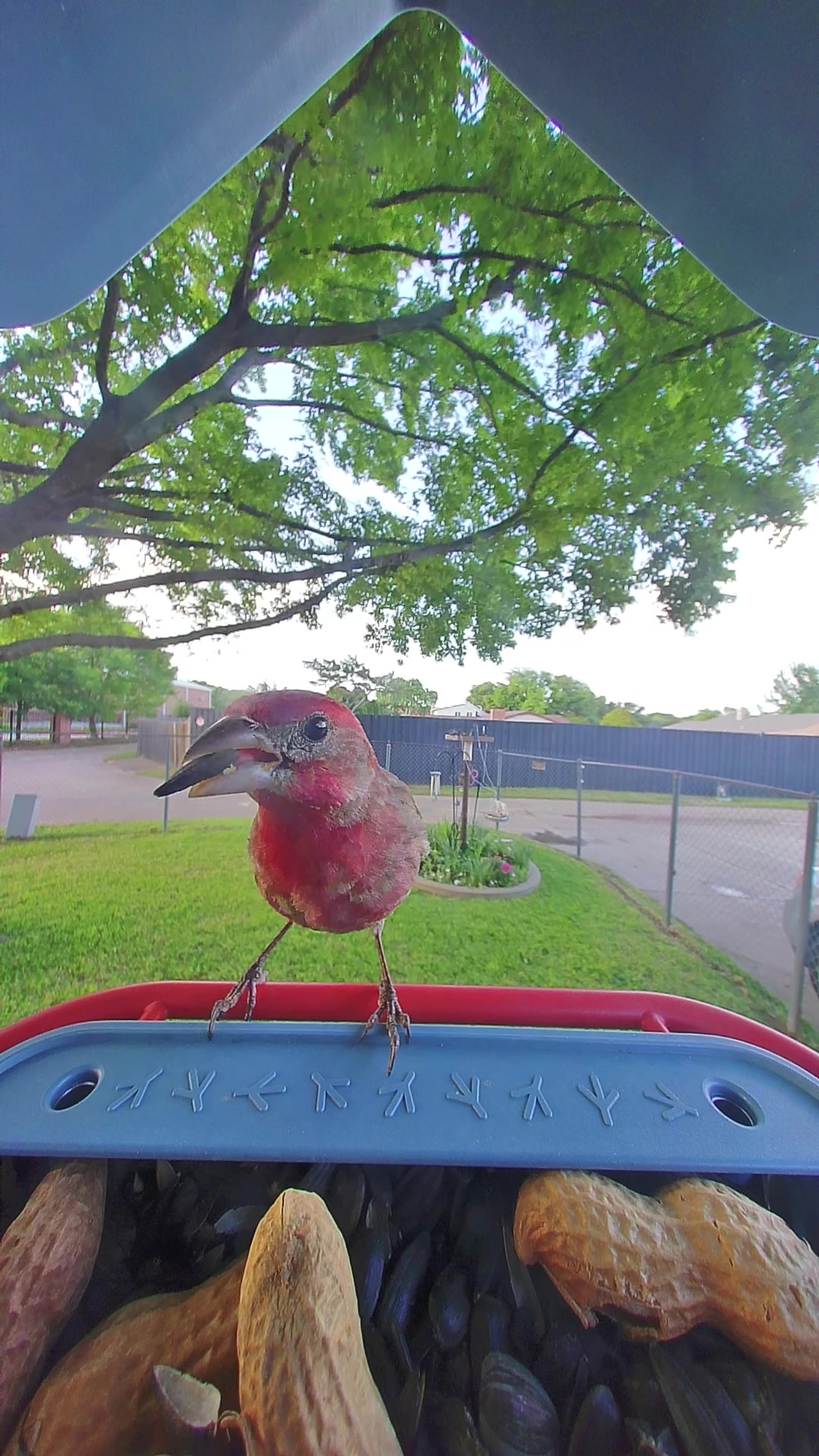
Bryn Brightcrest is not the loudest singer at the feeder, but he is the most consistent. He arrives before the crowd has gathered and stays after the rush has thinned, moving through the yard with the unhurried confidence of a bird who has already decided this place is worth knowing well.
His crest is the thing people notice first — a red that catches the light differently depending on the angle, richer than most house finches manage, the color of a late afternoon in October. He did not arrive in company, as many of his kind do. He found the feeder on his own and has been returning on his own terms ever since.
In Emberwood, the house finch who comes and goes alone is often misread as a loner. Bryn is not a loner. He simply has a different relationship with belonging. He belongs to the yard the way a good song belongs to a room — not because it was put there, but because it fit, and the room is quieter without it.
He sings at odd hours: midmorning when most birds have retreated; late afternoon when the light has gone orange and the feeders are nearly empty. It is as if he is filling the gaps the other birds leave behind — the unmapped hours, the unlabeled corners. Bryn is not mapping Emberwood for anyone else’s use. He sings because the territory needs to know it is known.
Oaths & Portents
Council Seat: None — Hearthfolk
Oath: To fill the unmapped hours with song, so no part of the realm goes unwitnessed.
Portent: When Bryn sings at midday — when no other finch bothers — something in the realm is asking to be acknowledged.