Mallard
Mallard
- Species: Anas platyrhynchos
- Type: Bird
- Range: Found across North America, including Texas; year-round resident in many southern areas
- Typical Size: 20-26 inches long; wingspan 32-39 inches; weight 2.5-3 pounds
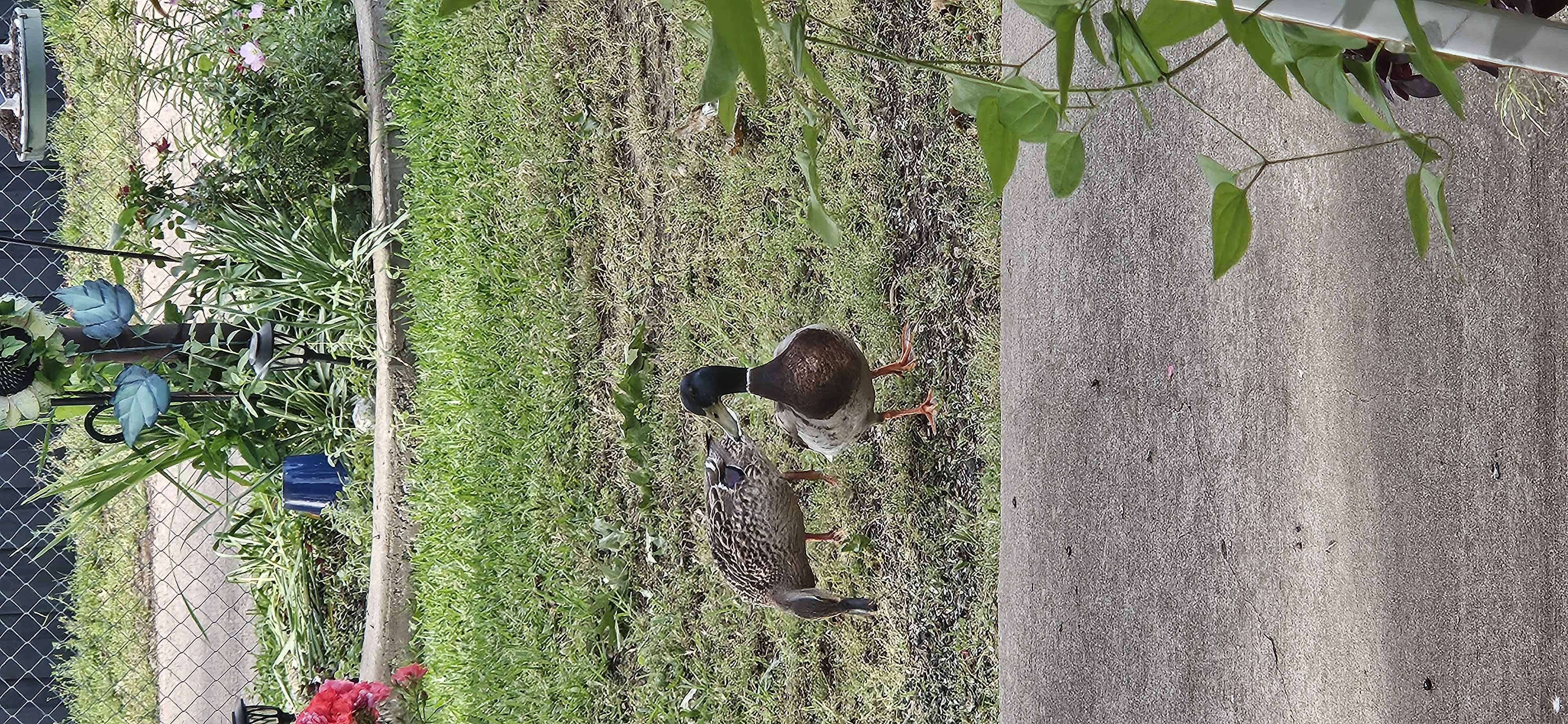
- Plumage Colors: Males have glossy green heads, white neck rings, chestnut breasts, and gray flanks; females are mottled brown with orange bills and blue wing patches
- Habitat Needs: Freshwater wetlands, ponds, marshes, lakes, and urban waterways
- Activity Period: Diurnal
- Diet: Seeds, aquatic vegetation, insects, small crustaceans, and grains
- Song/Call Description: Females give the familiar loud “quack”; males make quieter rasping calls
Bird Behavior
- Notable Behaviors: Dabbling (tipping forward to feed), highly social, frequently seen in pairs or flocks
- Nesting Habits: Ground-nesting near water; nests hidden in grass or shrubs; female incubates and raises ducklings alone
- Attracts To Garden By: Water features like ponds or bird baths, cracked corn, aquatic plants
- Migration Patterns: Partial migrant-northern birds move south in winter, while southern populations like those in Texas often remain year-round
Favorite Plants Or Features
- Favorite Trees/Shrubs: Willows, buttonbush
- Favorite Flowers/Grasses: Cattails, sedges
- Shelter Choices: Tall grass, reeds, or dense ground vegetation near water
Notes
- Interaction with Pets: Generally avoidant but may approach if used to people; ducklings are vulnerable to off-leash dogs
- Special Notes: Male’s colors are brightest during breeding season; very adaptable and commonly seen in city parks
Description
Mallards are one of the most recognizable ducks in North America. The male’s iridescent green head and bold markings contrast with the mottled brown female. They fly with strong, direct wingbeats and often call out with a series of quacks. Mallards are highly adaptable, thriving in both wild wetlands and suburban ponds. You might see them waddling through lawns or paddling calmly in retention basins. They’re a common but welcome sight in any garden with a bit of water.
See Also
- _Emberwood