Red-Bellied Woodpecker
Red-bellied Woodpecker
- Species: Melanerpes carolinus
- Type: Bird
- Typical Size: 9.2 in / 13.0-16.5 in wingspan
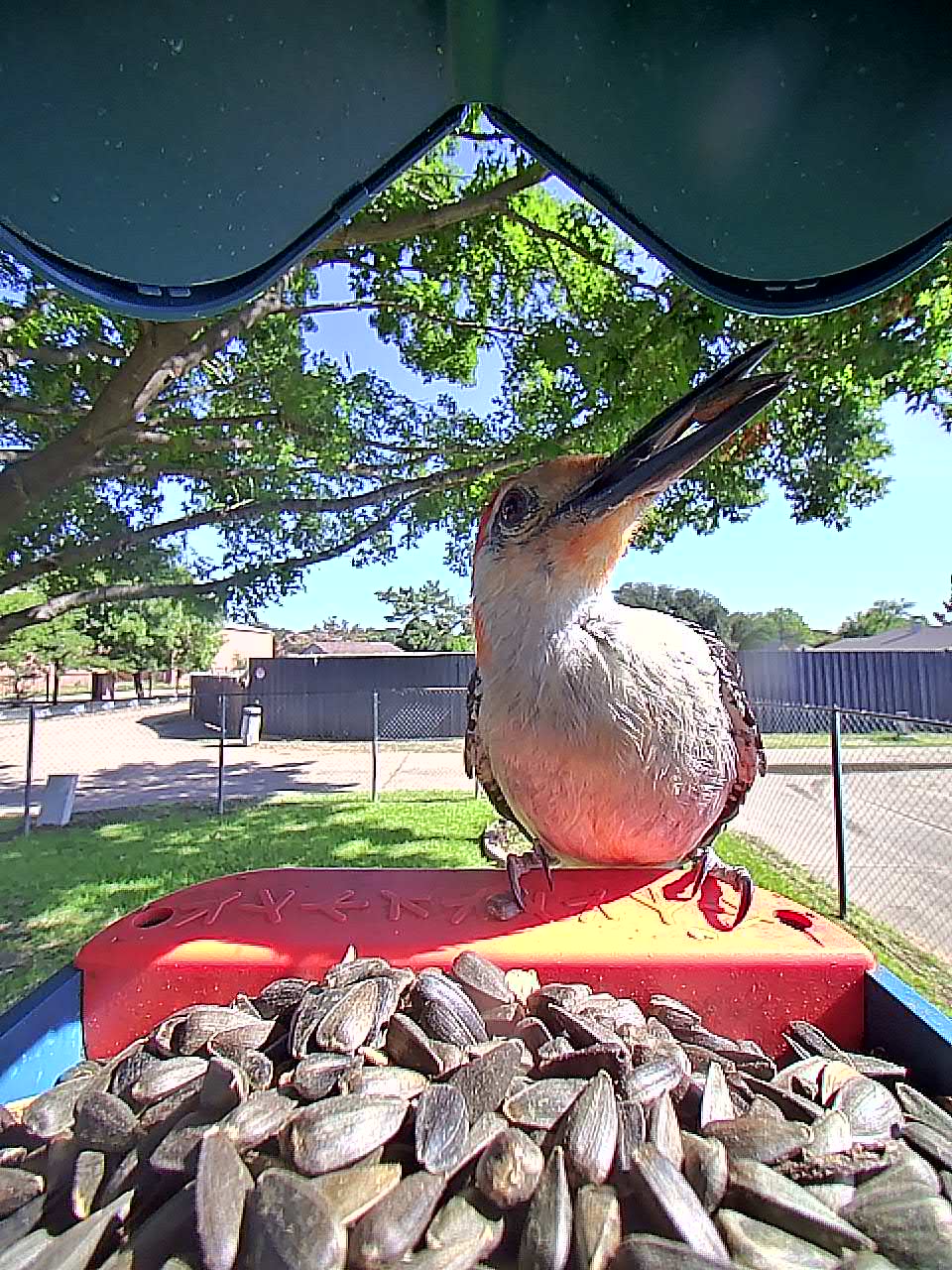
- Plumage Colors: Light gray face and underparts, black-and-white barred back; red crown and nape (males), red nape only (females); faint reddish wash on belly
- Habitat Needs: Mature trees / Woodlots / Suburban yards / Deadwood for foraging and nesting
- Activity Period: Diurnal
- Diet: Insects / Nuts / Fruit / Seeds / Occasionally sap and suet
- Song/Call Description: Rolling “churr” or “kwirr” calls and loud, repeated tapping/drumming
Bird Behavior
- Notable Behaviors: Tree foraging / Drumming / Caching food / Hanging upside down to reach insects
- Nesting Habits: Tree cavity (often in dead trees or branches)
- Attracts To Garden By: Suet feeders / Mature trees / Deadwood snags / Fruit-bearing plants
- Migration Patterns: Resident
Favorite Plants Or Features
- Favorite Trees/Shrubs: Oak / Pecan / Elm / Hackberry / Any with bark insects
- Favorite Flowers/Grasses: N/A - prefers trees and woody plants
- Shelter Choices: Tree cavities / Dead limbs / Nest boxes for larger birds
Notes
- Interaction with Pets: Cautious / Loud alarm calls when disturbed / May freeze or retreat up trunk
- Special Notes: Despite the name, the red belly is subtle and often hard to see-more of a blush than a banner
Description
The red-bellied woodpecker is a striking and often loud backyard visitor, known for its bold black-and-white back and vibrant red cap. Active and acrobatic, it climbs trees with ease and often taps or drums to communicate and establish territory. It’s frequently seen at suet feeders or scaling tree trunks in search of insects. Despite its name, the reddish tinge on its belly is subtle, usually visible only in good light. These woodpeckers are year-round residents and highly adaptable, making them regulars in wooded suburban areas.
Known Emberwood Members
- Orlin The Crimson — Canopy Court Herald