The Tray
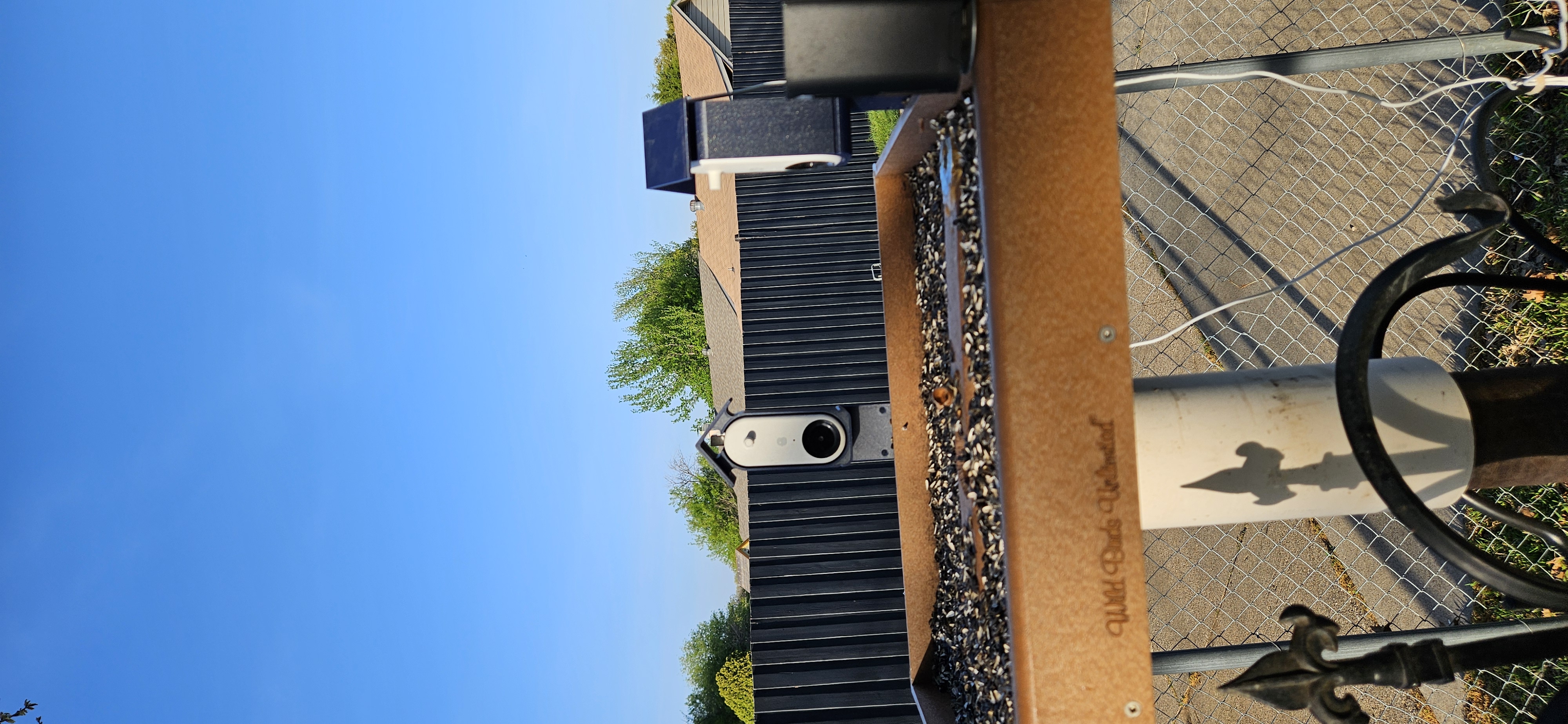
Before the Provision, before the councils, before the name Emberwood was spoken by a wren on a frost-bright morning — there was The Tray.
It was placed for the birds. The Fox Squirrels of the Russet Hold were not consulted.
They came anyway, because Fox Squirrels do not require an invitation to conclude that something is theirs. They arrived with the confidence of those who have never seriously entertained the possibility of refusal, and they ate, and they returned, and they ate again. The birds adapted — working the edges, waiting their turn, arriving in the windows between squirrel visits with the practiced patience of those who have learned that abundance shared is still abundance.
This was not the arrangement anyone intended. It became the arrangement that held.
The Russet Hold
The Fox Squirrels of Emberwood are known collectively as The Russet Hold — not a council, not a faction, and emphatically not a governing body. They do not govern. They occupy. There is a difference the crows understand and the cardinals pretend not to.
The Russet Hold does not negotiate. It does not attend summits or send envoys. When it wants something at The Tray, it takes it. When it is full, it leaves. When it is gone, the birds move in. This is not a treaty — it was never agreed to by anyone. It is simply what happens, repeated often enough to have become law.
The realm has conceded The Tray. This is understood by all parties, stated by none.
The Hold’s members are not individually named. They have been observed, catalogued by the Sentinels, recognized across seasons by weight and habit and the particular boldness with which each one lands on the cedar fence post before descending to The Tray. The crows know their faces. The crows know everything. They have simply chosen, thus far, not to share it.
What The Tray Holds
Black oil sunflower seed, which is what Emberwood runs on. And occasionally — not on any schedule the birds can predict or the squirrels can rely upon — peanuts in the shell.
The peanut days are events. The crows arrive with unusual speed, as though they were already watching when the peanuts appeared, which they probably were. The grackles follow, because grackles follow anything that draws crows. The Fox Squirrels treat peanuts as their birthright and collect them with the focused efficiency of those conducting an inventory. The jays, if present, make the most noise about it.
The peanut is not a staple. It is a occasion. Emberwood has learned not to expect it and to appreciate it thoroughly when it comes.
The Ground Below
Not all of Emberwood’s feeding happens at height. The crows and the mourning doves are ground feeders by inclination — they work the lawn beneath The Tray and The Provision, gathering what falls, what scatters, what the perch-feeders waste in their haste. Most any day, you will find them there: doves in their unhurried drift, crows with the deliberate efficiency of birds who have already calculated exactly how much ground to cover.
On certain days, something else arrives on the lawn — stale cat food, placed there by the realm’s keeper. This is not seed. It is not peanuts. It is something richer and stranger, and the crows know it immediately.
On cat food days, the Council of Black Sentinels convenes without announcement. They arrive quickly — too quickly, the suspicious would say, for birds who happened to be passing by — and they work the lawn with focused purpose, each crow maintaining the precise spacing that signals cooperative feeding rather than competition. The mourning doves yield the ground without drama. The grackles observe the situation and calculate their odds. The smaller birds, wisely, stay on their perches.
The cat food does not arrive on a schedule. The crows have learned not to rely on it. They have also learned — as crows learn everything — exactly what it looks like when the conditions that precede it are being assembled, and they position themselves accordingly.
The Tray Before Names
The Tray existed in what the older birds call the unwatched time — before any eye was placed to record, before return visits were confirmed, before Emberwood knew it was Emberwood.
In the unwatched time, the crows came to The Tray in the early cold hours and left before the light was full. Galrath Longvane and his retinue moved through it like a weather system — arriving in numbers, consuming methodically, departing without comment. Mournwyn Of The Vale and the other doves settled its flat surface in the slow-drifting way doves settle everything, as if they had always been there and would always be. The woodpecker came for the suet when it was offered. The sparrows worked the edges.
None of them had names yet. The Tray didn’t care. It fed them anyway.
When The Watching Eye Arrived
The Provision appeared later — smaller, more particular, positioned for the birds that the Tray-holders would crowd out. The Bird Buddy saw immediately. It named and remembered. It is how Emberwood became Emberwood.
The Tray waited.
It was the last to receive the Watching Eye — two lenses in hand-made housings, set at angles to each other so that nothing could approach from any direction unseen. When the cameras finally arrived at The Tray, they found an ancient place already deep in its own routines: squirrel, crow, grackle, dove, the patient ordering of a world that had been functioning without witness for longer than the rest of Emberwood had existed.
The Tray did not change when it was seen. It had never needed to.
The Tray’s Place In The Realm
The councils do not formally claim The Tray. The Canopy Court watches it from the fence line but does not decree over it — the cardinals are too dignified to compete openly with squirrels, and too wise to pretend the competition doesn’t happen. The Sentinels observe The Tray the way they observe everything: without intervention, without announcement, with complete and permanent attention.
The Hearthroot Moot considers The Tray common ground — a place where the Moot’s usual authority over daily provision yields to something older. Sir Bramblewick Thistletongue has been seen at The Tray on winter mornings, eating beside a Fox Squirrel the size of his entire extended family, apparently unbothered.
The grackles treat it as theirs by right of size and loudness. The mourning doves treat it as a slow afternoon. The crows treat it as a field office.
The Fox Squirrels treat it as home, because it is.
Legacy
The Tray is the oldest fact in Emberwood. It predates the name, the councils, the chronicles, and the cameras. It will likely outlast all of them.
When Emberwood scholars — if Emberwood ever produces scholars — seek to understand the realm’s true foundation, they will look past the Provision and the councils and the great events, and they will find The Tray: unglamorous, unheroic, perpetually full of Fox Squirrels and cracked corn, functioning exactly as it always has.
Some foundations do not look like foundations. They look like a weathered wooden tray on a fence post, with tooth marks on the edges and a crow watching from the cedar.