Ruby-Throated Hummingbird
Ruby-Throated Hummingbird
- Species: Archilochus colubris
- Type: Bird
- Typical Size: 3.0-3.5 in / 3.1-4.3 in wingspan
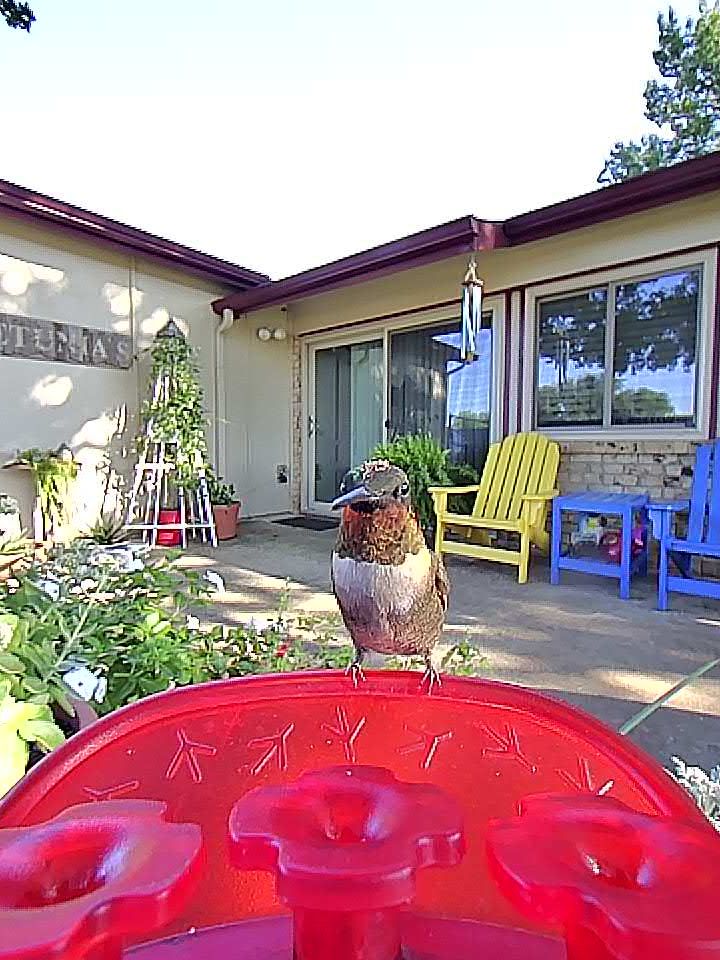
- Plumage Colors: Males: metallic green with iridescent ruby-red throat; Females: green upperparts, white underparts, and no throat patch
- Habitat Needs: Flowering plants / Shrubs / Wood edges / Water sources
- Activity Period: Diurnal
- Diet: Nectar / Small insects / Tree sap
- Song/Call Description: High-pitched “tik” or “chip” sounds; males may emit a whirring during display dives
Bird Behavior
- Notable Behaviors: Hover-feeding / High-speed chasing / Display diving / Territorial defense
- Nesting Habits: Tiny cup nest in trees or shrubs, camouflaged with lichens
- Attracts To Garden By: Nectar feeders / Native flowering plants / Water misters / Perches
- Migration Patterns: Summer Migrant (breeds in North Texas; winters in Central America)
Favorite Plants Or Features
- Favorite Trees/Shrubs: Oak / Elm / Dogwood / Small trees for nesting
- Favorite Flowers/Grasses: Salvia / Turk’s Cap / Coral Honeysuckle / Trumpet Vine / Bee Balm
- Shelter Choices: Dense foliage / Shrubs / Overhanging branches
Notes
- Interaction with Pets: Avoids pets / May scold from nearby perch / Too fast to catch
- Special Notes: Aggressive around feeders; one bird may dominate a feeder and chase others off
Description
The ruby-throated hummingbird is a dazzling summer visitor to gardens, renowned for its iridescent feathers and rapid, darting flight. Males flash a bright ruby-red gorget in sunlight, while females display elegant, subdued tones. These hummingbirds feed frequently throughout the day, relying on nectar, insects, and tree sap for energy. They are fiercely territorial-especially around feeders-and will chase off rivals with fearless speed and agility. Their nests are works of natural art, often blending seamlessly with a tree branch. In the garden, their presence brings a burst of motion and color, especially when flowers are in bloom and nectar feeders are well-stocked.
Known Emberwood Members
- Veloria the Swift — Other Powers in Motion
- Ruby Sue — Other Powers in Motion
- Thistledart — Other Powers in Motion