House Sparrow
House Sparrow
- Species: Passer domesticus
- Type: Bird
- Typical Size: 6.3 in / 7.5-9.8 in wingspan
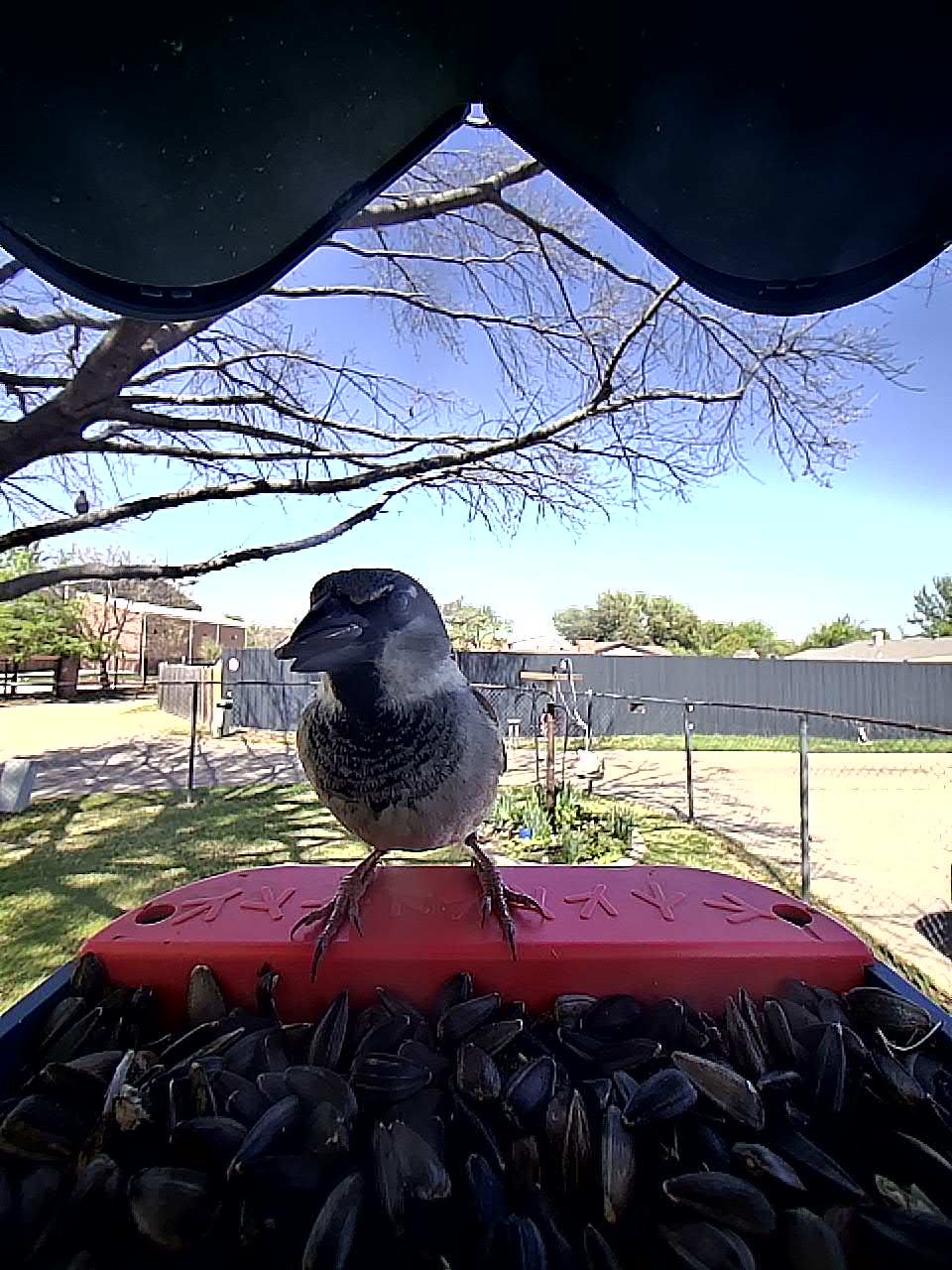
- Plumage Colors: Males: gray crown, black bib, chestnut nape, and streaky brown back; Females: plain buffy brown with lighter underparts
- Habitat Needs: Trees / Shrubs / Open Fields / Human Structures / Water Sources
- Activity Period: Diurnal
- Diet: Seeds / Insects / Mixed
- Song/Call Description: Series of short chirps and chatters; noisy and persistent, often a harsh “cheep”
Bird Behavior
- Notable Behaviors: Nesting / Singing / Courtship Displays / Feeding Young / Dust Bathing
- Nesting Habits: Cavities / Human Structures (gutters, vents, signs, eaves)
- Attracts To Garden By: Feeders / Nest Boxes / Brush Piles / Birdbaths
- Migration Patterns: Resident
Favorite Plants Or Features
- Favorite Trees/Shrubs: Small deciduous trees / Shrubs near buildings
- Favorite Flowers/Grasses: Native grasses / Sunflowers / Grain-bearing plants
- Shelter Choices: Dense shrubs / Eaves and ledges / Birdhouses (especially older ones)
Notes
- Interaction with Pets: Bold / Will scold from branches / Cautious around cats
- Special Notes: Common year-round visitor; highly social and unbothered by human presence
Description
The house sparrow is a familiar, small brown bird often seen hopping through garden beds or chirping noisily from a rooftop. Males sport a crisp black bib and chestnut accents, while females are more subtly streaked. These birds are highly adaptive, favoring human-built environments and often nesting in crevices around homes. Their fluttery, undulating flight style and constant chatter make them easy to recognize. In the garden, they gather in small flocks, eagerly taking seed from feeders and dust bathing in dry patches of earth. While common, their sociability and spirited presence bring a lively charm to even the most ordinary spaces.
Known Emberwood Members
- Captain Jack — Hearthroot Moot
- William Turner — Hearthroot Moot
- Sir Pipsqueak — Hearthroot Moot
- Nettlewick Featherroot — Hearthroot Moot
- Merrifeather — Hearthroot Moot