White-Winged Dove
White-winged Dove
- Species: Zenaida asiatica
- Type: Bird
- Typical Size: 11 in / 18-22 in wingspan
- Plumage Colors: Light grayish-tan body, bold white stripe on wings, dark primary feathers, red eyes with a blue eye ring
- Habitat Needs: Urban/suburban areas with trees, desert scrub, open woodlands, and gardens
- Activity Period: Diurnal
- Diet: Seeds / Grains / Fruits / Occasional insects
- Song/Call Description: A rhythmic cooing: “who-cooks-for-you” with a slight owl-like quality
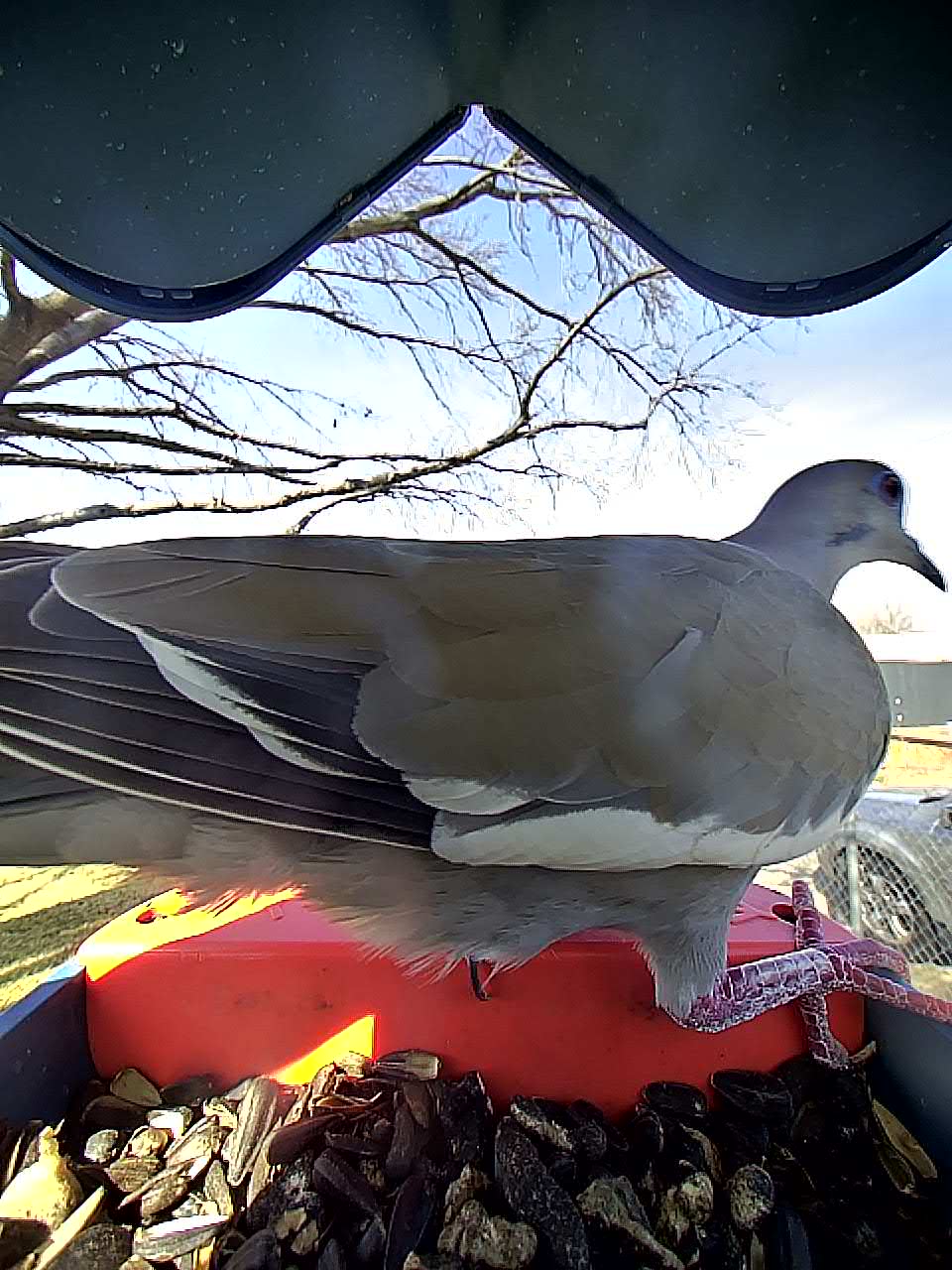
Bird Behavior
- Notable Behaviors: Ground feeding / Perching in groups / Quick takeoffs with whistling wings
- Nesting Habits: Nests in trees or shrubs, often in urban landscapes; nests are flimsy and built of twigs
- Attracts To Garden By: Platform feeders / Ground seed / Birdbaths / Tall perching spots
- Migration Patterns: Partial migrant; many are year-round residents in North Texas
Favorite Plants Or Features
- Favorite Trees/Shrubs: Mesquite / Oak / Ash / Palm / Ornamental trees
- Favorite Flowers/Grasses: Sunflowers / Millet / Grain-producing grasses
- Shelter Choices: Dense tree foliage / Overhanging branches / Garden structures
Notes
- Interaction with Pets: Cautious but not especially shy; may linger if undisturbed
- Special Notes: Their wing whistle during takeoff is a distinctive giveaway even when unseen
Description
The White-winged Dove is a graceful, medium-sized dove easily recognized by the bold white flashes on its wings, visible in flight and even at rest. Its soft cooing call echoes from rooftops, power lines, and backyard trees during the warmer months. Though originally a desert bird, it has adapted remarkably well to urban and suburban environments. These doves often feed on the ground beneath feeders and will perch patiently on fences or rooftops, waiting their turn. Their strong, direct flight and sudden wing-whistles make them surprisingly dramatic for such a mellow bird. In North Texas, they’re now a year-round fixture in many neighborhoods, often arriving in pairs or small flocks.
Known Emberwood Members
- Rowyn The Skyborn — Twin Orders Of The Sky
- Solmir The Skyguard — Twin Orders Of The Sky
- Lyrwen The Dawnwarden — Twin Orders Of The Sky
- Selithra The Brightwing — Twin Orders Of The Sky
- Eryndel Of The Sunflight — Twin Orders Of The Sky
- Blue Eyes — Twin Orders Of The Sky
- The Imposter — Twin Orders Of The Sky
- Caelwen — Twin Orders Of The Sky